
How Artisanal Mining Affects Your Coffee?
A lot has been written about the large-scale mining conglomerates that dominate global mineral extraction and command vast capital, complex supply chains, and advanced processing infrastructure. Yet, operating alongside these corporate giants is a far more common and informal sector: Artisanal and Small-Scale Mining (ASM). Typically conducted by local populations relying on manual labor and low-tech equipment, artisanal mining across developing regions in Africa, Asia, and Latin America accounts for up to 20% of global mineral production – including significant shares of gold, gemstones, cobalt, and tantalum.
Informal and illegal operators frequently rely on crude processing methods and hazardous chemicals for extraction. Typically lacking formal oversight and effective effluent management and containment, these operations discharge untreated, toxic runoffs directly into nearby soil and river networks – introducing dangerous concentrations of mercury, cyanide, cadmium, lead, and arsenic into freshwater ecosystems. Driven by surging global demand for critical tech minerals, these unregulated practices have escalated, triggering cascading disruptions across rural and national infrastructure.
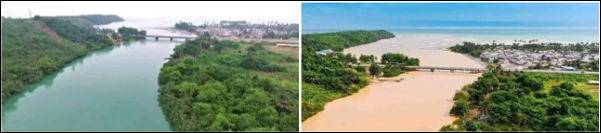
Before (left) and after (right) illegal mining related contamination in the Ankobra river, Ghana
Historically relied upon for drinking water, sanitation, and subsistence fishing, rivers are transformed into vectors for chronic illnesses from bioaccumulated heavy metals, while stagnant dredging pits trigger surges in malaria and waterborne pathogens. This contamination accumulates in irrigation channels and agricultural soils, directly threatening core export crops like cocoa, coffee, tea, and rice.
Simultaneously, water treatment utilities face escalating costs for specialized chemical filtration or total plant shutdowns due to extreme turbidity and chemical toxicity, cutting off urban potable water.
Centralized processing hubs and standardized tailings management can provide a vital infrastructure solution for mitigating these severe environmental and economic risks. By consolidating mineral processing into dedicated, professionally managed facilities, host nations can eliminate the widespread use of hazardous chemicals in rural waterways. These hubs enable the deployment of advanced, eco-friendly extraction techniques, and closed-loop water treatment systems that individual miners cannot afford – dramatically lowering heavy metal discharge into surrounding ecosystems.
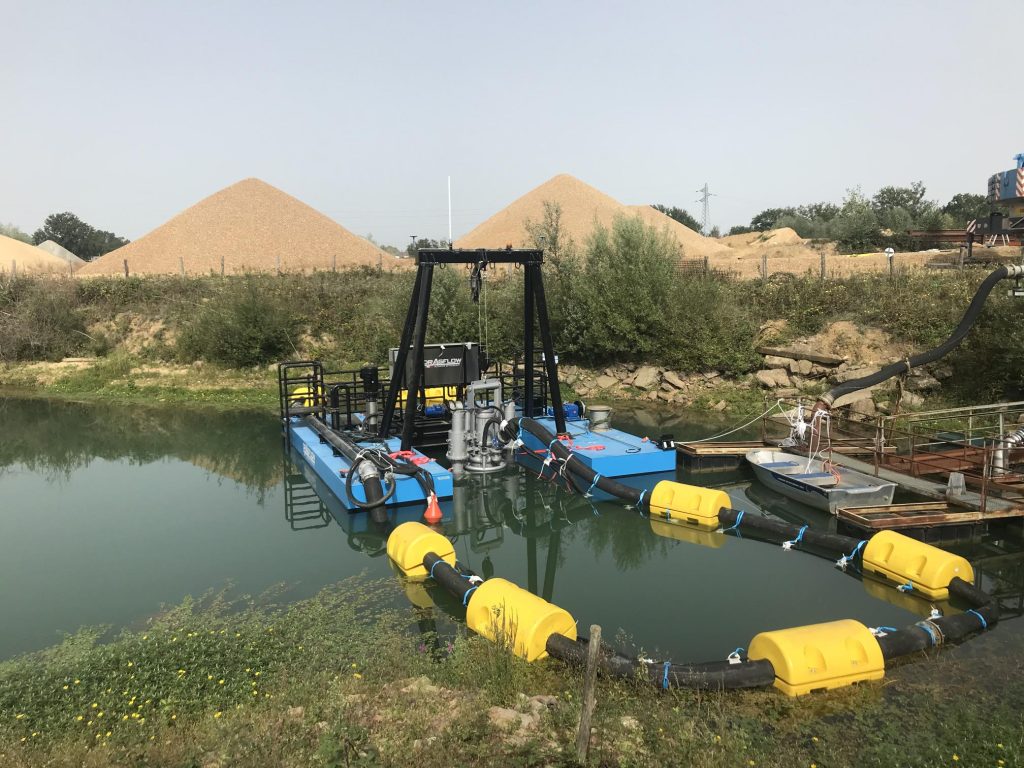
Left: dredging a contaminated river. Credit: Dragflow S.r.l.
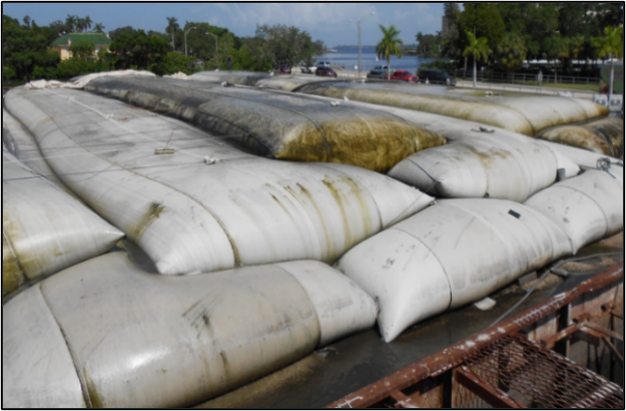
Right: Dewatering of contaminated river sludge using Geotextile tubes. Credit: Flint Technical Geosolutions, Inc.
Furthermore, modern centralized tailings management approaches rely on responsible dredging practices and utilize geotextile tube sludge containment alongside engineered impoundments to ensure toxic slurry and dredged sediments are safely dewatered, contained, treated, and monitored. This prevents acid mine drainage and catastrophic dam failures potentially restoring downstream water quality.
As governments in developing nations face mounting pressure to enforce environmental regulations, ASM is often targeted for rapid reform. However, because (ASM) is driven by socio-economic necessity, punitive bans may likely fail. Effective resolution requires balancing strict watershed enforcement with structural support – providing miners with streamlined licensing, training in non-toxic extraction, and access to centralized infrastructure to safeguard public health and transition ASM into a sustainable economic asset.
This is the third post in our series on Mining. Previous posts addressed tailings and intelligent dredging. Following posts will be on additional related issues like dewatering, geotextile tubes, dredging pipes, responsible mining and landscaping. Our posts are posted on our website www.terra-sea.com. We invite you to follow us on LinkedIn.
Albert, September 9th, 2026
Terra Sea Technical Solutions Ltd.
© 2026 All Rights Reserved© 2026 Terra Sea Technical Solutions Ltd.