
What is common to gold, silver, phosphate and salt?
Mining operations are essentially critical to our economy and to all industries, even to our lifestyle (for example, will our phones function without copper, gold, lithium?). Regardless of which separation method is used in the mine, the extraction, processing and cleaning are complex and expensive operations that continuously produce incredible quantities of solid waste in the form of a particularly dense sludge.
The sludge, often known as “tailings”, is often abrasive, containing a mixture of crushed rocks, sand, water, unextracted metals and quite often large quantities of hazardous materials from the chemicals used in the process. It must be continuously removed and safely stored and contained in carefully designed massive dams and tailing ponds or dry stacked. In fact, the dredging process never stops, as the tailing ponds must also be continuously maintained, to ensure dam safety and avoid environmental disasters.
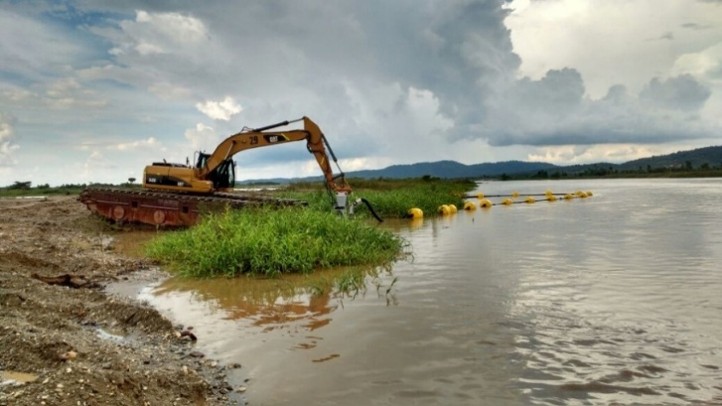 Tailings, gold mine, Columbia (Credit: Dragflow)
In the past, when natural resources were abundant and demand was limited compared to today, the sludge was typically contained in tailing ponds, stored and maintained as a “necessary evil” and regarded as a potential source of readily available material that can be used to backfill underground tunnels.
In fact, the tailing ponds represent significant opportunities to the mining companies. The modern approach utilizes the tailing ponds as a valuable secondary mining opportunity. Since crushing is typically a major mining operational cost, working with tailings means that the mines can recover large volumes of material by simply dredging them from the tailings dams, without the additional expense of crushing.
Just as important, recovering unextracted metals and materials from the tailings, that can be re-processed, increases the availability of raw materials, while allowing the mining company to benefit from environmental incentives and comply with government regulations. Happily, in this situation, reducing operating costs and increasing profitability are aligned with environmental benefits.
On the practical side, machines like dredgers, pumps and excavators enable all aspects of mining operations and must be used continuously throughout the entire mining cycle including decommissioning and shutdown. These machines must therefore be efficient, reliable, dependable, suitable for their various applications, durable in the most demanding situations, and very safe to use, so as not to expose the operators to health risks or cause an environmental disaster.
In the example below, an owner of a phosphate mine in north Africa wanted an effective solution for pumping the phosphate minerals in the tailings for reprocessing. He didn’t need to purchase a new machine because the solution multi-used the same machines that he already had been using for continuous sediment dredging for maintaining a good reservoir capacity. This nicely demonstrates the flexibility of utilizing dredging and pumping systems for diversified tasks, eliminating idle times and increasing production efficiency.
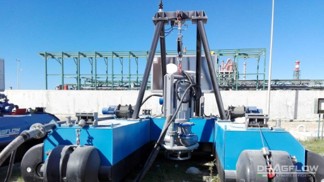
Remotely controlled dredger, frontal view of the main dredging pump (credit: Dragflow)
Another example is from an iron mine in Brazil, producing large quantities of solid waste that is pumped to sedimentation ponds inside the processing plant. Once the tailing ponds are full, the sediment must be pumped out and transported for final disposal. However, pumping is quite challenging since the sediment is so concentrated, almost solid, such that no dewatering is required before uploading it onto the trucks. The mine owners looked for specialized pumps with good value for money, thus coming to Dragflow (Italy). The system developed for that purpose consisted of an autonomous unit, with a strong pump seamlessly integrated with the excavator’s arm, powered by the auxiliary hydraulic lines, with no need for an additional hydraulic power unit.
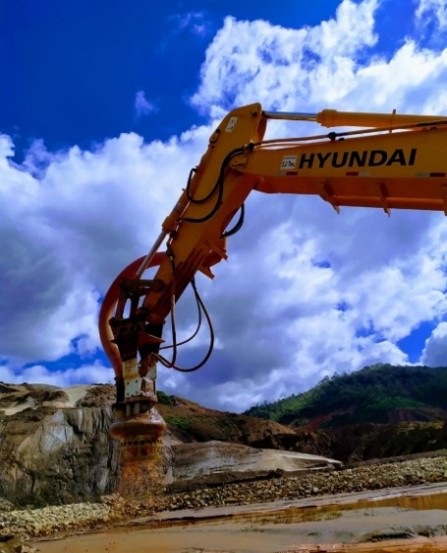
Iron Mine, Brazil (Credit: Dragflow)
This is the first post in our series on mining. Following posts in this series will address additional mining-related issues such as dewatering, geotextile tubes, dredging pipes, responsible mining and landscaping.
We invite you to follow us on LinkedIn.
Nelly, June 24th, 2026
Terra Sea Technical Solutions Ltd.
© 2026 All Rights Reserved